Showing posts with label health insurance. Show all posts

Monday, May 15, 2017

TrumpCare Dissected & Explained in Plain English


To understand TrumpCare we have to first go back and redefine the insurance industry. It used to be that insurance was essentially a large scale, calculated group gamble. A group of 10 people each put in $100/month, with the expectation that of those ten people, 8 of them would probably only use about $100/month, give or take a few dollars. One person wouldn’t use their insurance at all, but would purchase it just to be safe. And the final person would likely need to use far more than $100, but the unused portion from the other nine people would cover the difference.

But then healthcare got more expensive and the pooled amount from the ten people didn’t cover everything. So the insurance providers raised the rates to $200. And then for the people that needed more than the $200/mo, they asked for more money. And lowered the rates for the group of people who barely used it.

To the business mind this makes sense. The person who uses more of the resources should have to pay more. But in reality what this really did was actually take money out of the system when they lowered the rates for the lower users.

And so they raised the rates on everyone. Again.

So people complained. And rightfully so. They were paying a lot more and receiving the same amount of care. And more and more people couldn’t afford insurance.

And then came ObamaCare, and the idea that access to healthcare was a right.

ObamaCare created more access to insurance by creating mandates, and tax credits. Mandates is just a fancy word for penalty. Fail to get insurance, pay a mandate.

Tax credits were not as easy to understand. To put it in simplest terms, pretend you receive a tax refund each year of $1,000. ObamaCare took that $1,000 and put it towards your insurance premiums for you, in theory, lowering your monthly insurance expenses. It also did away with all pre-existing conditions. You no longer paid more if you used more. Basically it used your own money to subsidize your insurance premiums.

It also greatly expanded Medicaid.

The problem was it varied from state to state, and didn’t always work the way it was planned. It raised taxes, and users no longer received tax refunds. And in many cases, at the end of the year, owed more money to the government to cover their tax credits.

Opponents of ObamaCare didn’t like the mandate or the higher taxes, or the poor administration and application of the program, which unarguably, was full of faults.

Which brings us to TrumpCare.

TrumpCare does away with the general pool and calculated gamble idea of insurance. And instead takes the “business is in business to make a profit” approach. The majority will pay a calculated, evened out sum. Some will pay less, and get less. And the higher risk, higher use pool will pay more.

And Medicaid is scaled back dramatically.

Wednesday, March 28, 2012

Why the Constitutionality of ObamaCare is Being Debated and RomneyCare is Not


I have previously posted about the differences between ObamaCare and RomneyCare. And because it is such an important question, I have turned it into its own dedicated page on this blog. (It is not just an old blog post.) Click the link above to see it.

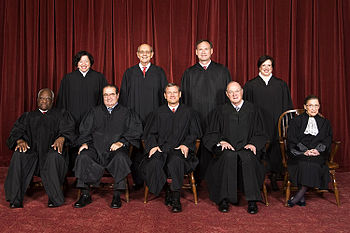
With aspects of ObamaCare being discussed at the Supreme Court this week, I wanted to revisit the subject, and address the issues before the SCOTUS. Starting with, how can you be for RomneyCare, but against ObamaCare? And if the mandates in ObamaCare are what are being debated as constitutional, why aren't the mandates in RomneyCare unconstitutional? And I aim to do this with as little bias as possible, and present it on just the facts alone.

The first and basic reason ObamaCare is potentially unconstitutional, and RomneyCare is not, is also the most important difference between the two programs. One is federal, one is state.

Also, as I said in my original post on this subject, many key aspects of the original RomneyCare bill were opposed by Romney. But he was over-ridden by the legislature in the final act, and many of the items he opposed are the basis for ObamaCare. That is why the argument that Romney "created the blueprint" for ObamaCare is invalid. More accurately it could be said the Democrats in the Massachusetts legislature created the template, and Romney opposed it. 

Saturday, March 3, 2012

RomneyCare vs ObamaCare - differences and similarities


I did my own research on the similarities and differences between "RomneyCare and ObamaCare" and created the following table.
Essentially what I found was that RomneyCare was a hugely bipartisan effort and that it shows. I learned that Governor Romney vetoed many key aspects of the original bill, but was over-ridden by the legislature in the final act, and many of the items he opposed are the basis for ObamaCare.

The two laws are inherently different, but do have a few similarities. Romney funded his primarily with revenue from the federal government. The Obama method uses a mixture of new taxes and savings from changes to Medicare. The Massachusetts plan was designed to expand coverage to the roughly 60,000 uninsured in that state; Obama’s includes mechanisms to help control health-care costs.
There are several similarities between the two acts. I have done my best to remove any bias and present an honest comparison of the two laws.
If an error is found, please let me know in the comments section, and please provide a source for your information. I provide my sources at the bottom of this post.


RomneyCare- Massachusetts Health Care Insurance Reform Law 2006 ObamaCare- Patient Protection and Affordable Care Act and Health Care and Education Reconciliation Act of 2010
SIMILARITIES
Offers subsidies to residents with income up to three times federal poverty level Offers tax credit to Americans with incomes up to four times the federal poverty level.
Extends coverage to low-income state residents through federal-state Medicaid. Extends Medicaid eligibility to low-income Americans.
Eliminates annual caps on coverage, limits maximum amount that consumers pay annually. Eliminates lifetime and annual caps on coverage, limits annual maximum to consumers.
Requires employers with 11+ workers who do not offer insurance to pay a penalty. Requires employers with 50+ employees to offer insurance or pay a penalty if at least one of their workers receives a tax credit to buy coverage.
Makes investments to improve wellness, prevention, and public health. Makes investments to improve wellness, prevention, and public health.
Created online marketplace for small employers to compare plans and options, saving admin costs. Created online marketplace for small employers to compare plans and options, saving admin costs.


DIFFERENCES
70 pages long 2,074+ pages long
Main goal: insure everyone in the state Main goal: regulate and control costs of healthcare industry
Did not raise taxes Creates new taxes of $500 billion on individuals and businesses
Does not cut Medicare Cuts Medicare by $500 billion
No affect on Medicaid Gives Medicaid more liberally
1.8% of state uninsured (provided opt-in, opt-out) 16.7% of US still uninsured
Romney vetoed employer penalty (legislature over-rode later) Penalizes and requires employers to offer different types of insurance
Cost the state 1% of budget Will cost $2 trillion
Puts responsibility on individual to buy insurance, while also creating employer penalty for not providing insurance. ($295 per person, but increases monthly (opposed by Romney) No mandate for individuals, creates tax incentives for individuals to purchase coverage (penalizes the uninsured)
Did not lower healthcare costs (did insure everyone) Main goal is to reduce healthcare costs (does so by passing the expense to employers)
Deregulated a complex overly regulated state program. It is still heavily regulated, but much less so. Raised the costs of private health insurance premiums by 9% in one year (even before enacted). Expected to eventually raise premiums 55-85%.
Romney opposed the Commonwealth Health Insurance Connector Authority, also known as the Health Connector. Among other roles, the Connector acts as an insurance broker to offer private insurance plans to residents. Obama plan is based around this regulatory exchange, imposing many requirements on what is considered “minimum creditable coverage” (for instance, contraception)
Romney supported a bare bones policy that covered hospitalization and catastrophic illness. Obama plan imposes several requirements on what is considered “minimum creditable coverage” (for instance- contraception)


Romney on the MassHealth Act, "It’s a Republican way of reforming the market. Because, let me tell you, having thirty million people in this country without health insurance and having those people show up when they get sick, and expect someone else to pay, that’s a Democratic approach. That’s the wrong way. The Republican approach is to say, ‘You know what? Everybody should have insurance. They should pay what they can afford to pay. If they need help, we will be there to help them, but no more free ride."


Governor Romney vetoed sections 5, 29, 47, 112 113, 134 and 137 of the MassHealth bill. The legislature overrode all vetoes. 

Summary of the vetoes-
Section 5- Creation of a public health council.
Section 29- Provides coverage to non-citizens, but qualified aliens permanently in US. Provides coverage for dental services to adults in a federal optional program.

Section 47- Requires employers of more than 11 full-time employees to pay a per-employee "contribution" if uninsured.
Section 112-  Amendment seeking a waiver from federal government to implement the act. Details terms and conditions for Medicare and Medicaid reimbursement (from state to fed).
Section 113- Details requirements of behavioral health services and funding by Medicaid. (does not change services, just details how state collects funds) Determines which businesses qualify as behavioral health services.
Section 134- Requires a report by department of labor and division of health care finance and policy on effectiveness of new law.
Section 137- Requirements of the public health council (opposed in section 5). 


SOURCES:
New Yorker: Romney's Dilemma (fascinating, highly recommend)
America Needs Mitt: RomneyCare vs ObamaCare
Massachusetts Legislature Website (actual bill) 
Boston.com: RomneyCare - a revolution that basically worked
CommonHealth: Huge Similarities Between ObamaCare and RomneyCare
Investors.com: Real Cost of ObamaCare