Showing posts with label Obamacare. Show all posts

Monday, May 15, 2017

TrumpCare Dissected & Explained in Plain English


To understand TrumpCare we have to first go back and redefine the insurance industry. It used to be that insurance was essentially a large scale, calculated group gamble. A group of 10 people each put in $100/month, with the expectation that of those ten people, 8 of them would probably only use about $100/month, give or take a few dollars. One person wouldn’t use their insurance at all, but would purchase it just to be safe. And the final person would likely need to use far more than $100, but the unused portion from the other nine people would cover the difference.

But then healthcare got more expensive and the pooled amount from the ten people didn’t cover everything. So the insurance providers raised the rates to $200. And then for the people that needed more than the $200/mo, they asked for more money. And lowered the rates for the group of people who barely used it.

To the business mind this makes sense. The person who uses more of the resources should have to pay more. But in reality what this really did was actually take money out of the system when they lowered the rates for the lower users.

And so they raised the rates on everyone. Again.

So people complained. And rightfully so. They were paying a lot more and receiving the same amount of care. And more and more people couldn’t afford insurance.

And then came ObamaCare, and the idea that access to healthcare was a right.

ObamaCare created more access to insurance by creating mandates, and tax credits. Mandates is just a fancy word for penalty. Fail to get insurance, pay a mandate.

Tax credits were not as easy to understand. To put it in simplest terms, pretend you receive a tax refund each year of $1,000. ObamaCare took that $1,000 and put it towards your insurance premiums for you, in theory, lowering your monthly insurance expenses. It also did away with all pre-existing conditions. You no longer paid more if you used more. Basically it used your own money to subsidize your insurance premiums.

It also greatly expanded Medicaid.

The problem was it varied from state to state, and didn’t always work the way it was planned. It raised taxes, and users no longer received tax refunds. And in many cases, at the end of the year, owed more money to the government to cover their tax credits.

Opponents of ObamaCare didn’t like the mandate or the higher taxes, or the poor administration and application of the program, which unarguably, was full of faults.

Which brings us to TrumpCare.

TrumpCare does away with the general pool and calculated gamble idea of insurance. And instead takes the “business is in business to make a profit” approach. The majority will pay a calculated, evened out sum. Some will pay less, and get less. And the higher risk, higher use pool will pay more.

And Medicaid is scaled back dramatically.

Sunday, February 7, 2016

My Personal Manifesto


1. I no longer consider myself a Republican. I am definitely not a Democrat either. I am a bleeding heart conservative, if such a thing exists. I believe in and defend the Constitution of the United States. That includes Religious Freedom and the Second Amendment. I believe in gay rights. I believe in many programs that help the less fortunate. And I really hate big government and big business.
2. I believe citizens have the right to bear arms. I do. I have no problem with people owning firearms. However, I do not think ALL people are smart or sane enough to have one, and do, 100%, firmly, and without question, believe we need stricter gun controls. Gun permits and CCL's need to be determined by much more than a computer and a gun store owner. And they shouldn't be for life. They should have to be renewable, just like a driver's license.
3. I am all for stronger and more States' rights. Sure it means some states will get a little carried away with their legislation. (California, Massachusetts, and Illinois come to mind.) But as long as people have the right to pick up and move away, or vote out bad politicians, those problems will take care of themselves in time. (Everyone in Utah knows at least one Californian who has moved to UT to get away from the craziness of CA.)
4. I believe that as things currently stand, politics and representatives has put gay rights and religious liberty at odds with each other. I do not believe that it has to be that way. And I think that in time that will start to work itself out. I believe in gay rights. I believe in religious liberty. And I will work to help those two things work in harmony with each other.
5. Donald Trump is a complete arse.
6. I fully support the refugee movement. I live in one of the designated refugee towns. I am not in a situation where I can provide housing for someone. But I will absolutely give my time, skills, and money to assist refugees in whatever way I can.
7. Obamacare is a complete disaster. The state marketplaces are a complete disaster. Healthcare reform has been a complete disaster. And my opinions are based solely on my personal experiences using all of the above. I firmly believe we need more controls and safeguards. I believe the insurance system in this country is a complete crock. I do not think the government should run insurance. At.All.
8. There is a violence and narcissism problem in this country. And I believe the two things go hand in hand. The more narcissistic people become, the more they believe they have the right to violent, unchecked, harmful behavior. I don't know how this can be fixed or helped, but something needs to be done.

Wednesday, June 24, 2015

2016 Presidential Primary Candidates on Healthcare

"Gov. Bobby Jindal in Oklahoma 2015" by Michael Vadon - https://www.flickr.com/photos/80038275@N00/17871530750. Licensed under CC BY-SA 2.0 via Wikimedia Commons 

I've been gone for a while, but I'm back. It's time to start talking about the new round of contestants in the presidential campaign primary elections! (Please go back and re-read that last line in your best Bob Barker "Price is Right" voice.) 
As is always the case this early on, the field is flooded with nearly identical campaign platforms. I will be taking the next few weeks, maybe months, to highlight the contenders and the issues. 
Today we start with a simple line item comparison of where they all stand on healthcare. 
The following statement are direct quotes from the candidates' websites, thereby keeping my opinion out of things [for the time being].

Rick Perry - no website statement
Scott Walker - I refuse to "get an account" on his site to get past the front page
Donald Trump - no website statement (but I did learn that "he is the very definition of the American success story") 
Mike Huckabee - "ObamaCare is a $2.2 trillion disaster that dumps millions of people into a broken, expensive system and does nothing to fix the basic problems everyday Americans face. We must tackle out-of-control costs. ObamaCare raided $700 billion from Medicare. This is not reform — it’s theft. We must reject government dependency. We need solutions and choices — not government mandates and new taxes. We must address pre-existing conditions with common sense. As a governor, I know these issues first hand. Our system of “sick care” is upside down. Doctors, hospitals and drug companies get paid for treating people who are sick — not keeping people healthy or preventing illnesses. So many Americans cannot afford to get sick, while others take advantage of a system that isn’t fair. ObamaCare simply doubles down on this backwards, broken, flawed and failing system. We need honesty, leadership and real reform. As President, I will repeal ObamaCare and fight for real health care reform."
Bobby Jindal - no website statement (but then, he's literally only been in the race 5 minutes)
Carly Fiorina - no website statement
Rand Paul - I was not a member of the United States Senate during the 111th Congress, but if I had been I would have voted against Obamacare. As your President, one of my first acts would be to repeal the abomination that is Obamacare.
As a doctor, I have had firsthand experience with the immense problems facing health care in the United States. Prior to the implementation of Obamacare, our health care system was over-regulated and in need of serious market reforms—but Obamacare is not the answer.
Government interventions in health care have driven up the cost of coverage and decreased competition within the market. More—not less—freedom to choose and innovate will make sure our health care system remains the best in the world.
As your President, I will ensure that real free-market principles are applied to the American health care system so that it is responsive to patients, families, and doctors, rather than government bureaucracy.
Hillary Clinton - Defend the Affordable Care Act and reduce health costs
We will slow the growth of overall health care costs and deliver better care to patients. And we will ensure that the savings from those reforms benefit families—not just insurance companies, drug companies, and large corporations.
Jeb Bush - no statement
Jim Webb - no statement
Martin O'Malley - no statement
Marco Rubio - "Repeal Obamacare and replace it with a conservative solution." There is a very long and detailed statement on his website. Also, for what it's worth, he has the most organized and detailed website of all the candidates thus far. 
Ted Cruz - no statement, which is a little shocking actually!

So basically what we've learned here today is that most of the candidates don't have an issues page up on their websites yet, And the Republicans that do are against Obamacare, and the Democrats that do like it. 


Don't miss my new novel, "You Heard It Here First!" on Amazon, Nook, and Kindle!

Friday, October 4, 2013

Shut down

 
To quote a co-worker, “The federal government is the only entity that could cut costs and shut down, and still lose money.”
When I look at the things people are whining about that have been closed due to the shutdown, I ask myself where the logic is in many of these programs.
For instance- the national monuments in Washington, DC have been closed. Each of these monuments has a gift shop that has been closed. I understand the monument being closed, as it costs federal dollars to pay the upkeep, power bill, security, etc. But the gift shop? Are you telling me that the money-making business isn’t profitable and requires federal dollars to maintain? How about step #1 is we stop putting federal tax dollars into postcards for tourists, and force the stores to run themselves? It seems so logical.
Next, national parks have also been closed. Again, I understand why. Maintenance, ranger staff, etc., they all cost money to operate. Except don’t most parks also charge admission? And have charitable organizations that support them? How is it then that they also need federal tax dollars? I think the problem here is that the federal government is supporting them at all. Why aren’t these parks (which often have restaurants, gift shops, classes, etc., inside) self-supporting? It seems fairly logical to me that they should actually be able to make money, and not drain federal tax dollars!
And the panda cam? Seriously? It’s not the absurdity that it had to be shut down. It’s the absurdity that tax dollars paid for it at all! Are you really telling me that there isn’t some corporation out there that wouldn’t love to sponsor the panda cam just for the goodwill PR benefits? Or a non-profit that wouldn’t raise funds to pay for it? I’d donate, wouldn’t you? Or how about people have to pay “admission” to view the panda cam?
Here’s another little thing to think about- a friend of mine works for a government contractor. S/he has been vocal about how “stupid” the government is for shutting down. And regularly vents and complains about all the “perks” that “Congress” receives. (I beg you, please, share with me just one “perk” that you can back up with unbiased facts.) Meanwhile his/her company (again- a federal contractor) is having the company party this week. It’s a massive, huge festival/fair. Roller coasters, games, rides, free food, etc. It easily will cost the company about $1M. Is it not hypocritical to demand that “congress” (I think many people use this term completely wrong) live frugally, and demand on a shoestring operation, while spending federal dollars on roller coasters and cotton candy? Or is it because you perceive that elected officials are all wealthy and chose their careers that you don’t see it the same way when your upper management is wealthy and also chose their careers?
Ultimately what is happening right now in our legislative branch is an amazing and elegant thing. Simply put, this country is equally split on a very divisive new law. Some believe that the Affordable Care Act is a good thing, others do not. Our elected representatives are only a reflection of the divided country. Our elected officials are representing what we as a country feel.
So how about instead of complaining and criticizing them, we support them? Has anyone considered that angle? Has anyone really thought about the fact that this is all a good thing?
Sure the shutdown is effecting millions of people. But right now the government is doing something many of us are not brave enough to do in our own lives. When you run out of money, you stop spending. It’s the “first rule of holes” concept (stop digging). When a business runs out of money, it goes out of business. It lays off employees. It cuts costs. It looks for new ways to make money.
Shouldn’t the government do the same?
I do feel a great deal of sympathy for my furloughed friends. I was unemployed and underemployed for 3 years. Believe me, I know how hard and scary it is to not know how long it will be until you get your next paycheck. But here’s the good news- you know you will get one. Most people don't have that peace of mind.
So I beg of my friends, instead of complaining about the government, stop and ask yourself what is really important. Where should tax dollars be spent? On the panda cam? And where can revenue be found? A museum gift shop?
And here's some food for thought- Mitt Romney took a debt-riddled Massachusetts, turned it around, and made it a profitable state in just one term in office. How? He turned resource-sucking programs into revenue generating ones. 
Makes you wish things had gone differently one year ago. 
 
Don't miss my new novel, "You Heard It Here First!" on Amazon, Nook, and Kindle!

Tuesday, September 17, 2013

Help Prevent More Unnecessary Tragedies by Contacting Your Senator About S.1284 and S.689 Today


The tragedy at the Navy Yard is yet another wake-up call to both citizens and lawmakers that the United States needs legislative reform.

The Navy Yard, Sandy Hook, Aurora, Fort Hood, Tucson, Virginia Tech, Columbine, and several other unnecessary mass murders all had one strong, undeniable detail in common- mental health disorders.

Placing the blame on firearms regulations will not stop mentally ill persons from attacking and hurting others. The root of the problem is the mentally ill, not the tool the person chose for their attack. The real problem lies with sick persons who were not treated for mental illnesses adequately.

The time has come to raise awareness of mental health disorders in the public square and provide more resources to help ill persons. All individuals need to learn and identify the mentally ill among them, and help the sick and afflicted get help. Schools need to be given more resources to identify and serve mentally ill students.

The stigma of mental awareness needs to be lifted so that the ill will not be afraid to admit their sickness and reach out for help.

I urge you to support the mental health funding levels in the Senate FY2014 Labor, Health and Human Services and Education Appropriations Bill (S.1284) and to cosponsor and enact the Mental Health Awareness and Improvement Act of 2013 (S. 689).

There has been a cut in state funding for mental health services and supports of nearly $5 billion over the last three years.  The Senate funding bill includes a roughly $107 million increase for much-needed, critical mental health services at the Substance Abuse and Mental Health Services Administration (SAMHSA) and would fund the National Institutes of Health (NIH) at FY2012 levels. 

S.1284 makes important strides in investing in "upstream services" such as suicide prevention, consumer programs, Project AWARE, etc. to begin to address the treatment chasm (80 percent of children and 66 percent of adults that need treatment do not receive it).

In the wake of the the Navy Yard shooting, the Sandy Hook tragedy, Aurora, and all of the other national crises, bi-partisan legislation was introduced by Sens. Tom Harkin and Lamar Alexander to assist states and local communities in addressing mental health needs ("upstream" services). 

The Mental Health Awareness and Improvement Act of 2013 (S. 689) was passed by an overwhelming vote of 95-2 in April as an amendment to a legislative vehicle that has since been pulled from the Senate calendar.
 

I urge you to support the funding levels in the Senate FY2014 Labor, Health and Human Services and Education Appropriations Bill (S.1284) in any future spending package or Continuing Resolution and to urge the Senate to have the House consider the Mental Health Awareness and Improvement Act of 2013 (S. 689). These important bills will help address the mental health and addiction needs in our state and communities.

You can show your support for this bill by contacting your Senator (click here to find your senator and her/his email address), and sending her/him the text in bold above.

Share this message on your blog, Facebook, Pinterest, etc. Help spread the word, and encourage everyone to not just "like" the post, but SEND THE MESSAGE TO THE SENATE TO SUPPORT SENATE FY2014 LABOR, HEALTH AND HUMAN SERVICES AND EDUCATION AND APPROPRIATIONS BILL (S.1284) AND THE MENTAL HEALTH AWARENESS AND IMPROVEMENT ACT OF 2013 (S.689)!

You can learn more about this legislation on the Mental Health America website. 

Why Are American Health Care Costs So High?

Monday, July 2, 2012

Wiliam Bennett on the Supreme Court and ACA ruling

CNN is running a fascinating opinion series by William Bennett on the Affordable Care Act and the Supreme Court ruling.

Some highlights from today's piece-

William Bennett
The Supreme Court's verdict on Obamacare is in. As a tax, the individual mandate stands; as a Commerce Clause regulation, it fails.
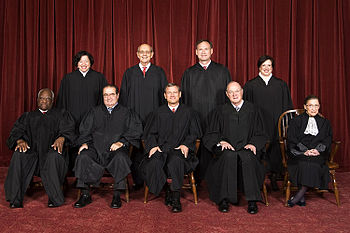
What remains to be seen is whether Chief Justice John Roberts has crafted a masterly constitutional balancing act -- limiting federal authority and respecting the separations of powers -- or if he has engaged in a disappointing and inappropriate usurpation of the legislative function.
There are arguments on both sides. Some say that Roberts, not wanting to uphold the liberal reasoning behind Obamacare and an unprecedented expansion of federal power, concocted an opinion that would be limiting in scope, while still respecting the law and seeming nonpartisan. Others say that Roberts has unlawfully manipulated the mandate into a tax, thereby giving legs to a law that has none...

Chief Roberts writes in the majority opinion, "The mandate can be regarded as establishing a condition -- not owning health insurance -- that triggers a tax -- the required payment to IRS."
The dissenters, Justices Antonin Scalia, Anthony Kennedy, Clarence Thomas and Samuel Alito, adamantly disagree: "[T]o say that the Individual Mandate merely imposes a tax is not to interpret the statute but to rewrite it..."

The dissent is right. Roberts recast the mandate as a tax, a rationale that was not in the law or the government's case. He rewrote the administration's position, baptized it, and then blessed it. Roberts' defenders argue that he did so to avoid a constitutional crisis, but he may have created another by judicially re-legislating policy, a policy paid for and enforced by what could be essentially the largest tax increase in American history.

Roberts could have characterized the mandate as a tax and sent it back to the Congress, whose role is to legislate taxation, to redo.
Furthermore, the Roberts opinion invalidated Obamacare's penalty on states that refuse the massive expansion of Medicaid subscribers. States can opt out of the expansion of Medicaid and not be subject to a loss of funding. This is no doubt a victory for federalism and the 26 states that filed lawsuits against the government.
 
The verdict, while a serious judicial blow to conservatives, may favor them politically. Mitt Romney and Republican leaders can now campaign relentlessly against a massive, sweeping tax increase that will fall on the shoulders of an already weak economy.

The Supreme Court did not hand conservatives a lifeline. Elections have consequences and this fall's will be monumental.

Friday, June 29, 2012

Obama Tweets BFD

Exactly four minutes ago I lost ALL respect for Barack Obama. Up until this very post I have always treated him and the office he is sworn to uphold with respect.
But after this tweet? I'm done. He deserves no respect.

I am absolutely appalled that the President of the United States and Commander in Chief would even remotely find this acceptable language and behavior becoming of his office.

Where does the link take you?
To his official Obama for America campaign store.

That's not even "spiking the football," folks. That's just flat out indecent and inappropriate behavior.

Thursday, June 28, 2012

ObamaCare Mandate is a Legal Tax. But is the RomneyCare Mandate a Tax?


The Affordable Care Act (ACA, aka ObamaCare) and the Massachusetts Health Care Reform Law (RomneyCare) are inherently different, but do have a few similarities. 
Romney funded his primarily with revenue from the federal government. 
The Obama method uses a mixture of new taxes and savings from changes to Medicare. 
The Massachusetts plan was designed to expand coverage to the roughly 60,000 uninsured in that state; Obama’s includes mechanisms to help control health-care costs.
There are several similarities between the two acts. I have done my best to remove any bias and present an honest comparison of the two laws.


The Supreme Court (SCOTUS) decision today has declared the ACA individual mandate (the requirement on Americans to have or buy health insurance beginning in 2014 or face a penalty) Constitutional "as a tax." 
There are a lot of questions and comments as to whether or not that makes the RomneyCare mandate a tax as well. 
THIS IS MY OPINION AND MY OPINION ONLY. But no, I do not think it is the same thing. This gets down into the nitty gritty of laws, so bear with me here. 
Originally the way the ACA was explained it did not create a mandate for individuals, it creates tax incentives for individuals to purchase coverage (or in other words, penalized the uninsured). This is the key detail SCOTUS caused the uproar over. 
RomneyCare, however, puts responsibility on individual to buy insurance, while also creating employer penalty for not providing insurance. 
The ACA tax penalty will be $285 per family or 1% of income, whichever is greater, when it goes into effect in 2014. By 2016, it goes up to $2,085 per family or 2.5% of income.
The Massachuesetts law penalizes individuals $295 per person, but increases monthly. It is important to note, the penalty was opposed by Romney.  
The key differences- the ACA penalizes people for not being able to afford coverage, or for choosing not to carry coverage. 
The Massachusetts version gives employers incentives to provide coverage. If an individual can afford it, and chooses not to carry it, they are penalized.
In other words, under Obama, it doesn't matter if you wanted it or not, or if you can afford it or not, if you don't have it, you get taxed. Under Romney, if you can't afford it, because your employer isn't making it available to you, your employer gets penalized. If you can afford it, and choose not to carry it, you pay a fee or mandate. 
Chief Justice John Roberts summarized it as such, "The Federal Government does not have the power to order people to buy health insurance. ... The Federal Government does have the power to impose a tax on those without health insurance."
Because the MA Health Plan is an opt-out situation, (pay a fee to opt-out), I do not believe this mandate would be considered a tax.
But, like I said, that is just my personal opinion. There are people with more legal experience than myself out there reading all of the summaries in much greater detail who will soon take to the talking head shows to debate otherwise, I am sure.
Overall, many aspects of this law are good and will help many people. No denying special conditions or pre-existing conditions? GOOD! Allowing young adults to stay on parents insurance longer? Kinda good. (I am all for SMALLER GOVERNMENT. I would prefer to have seen consumers put the pressure on companies to do this, or for the companies to do it on their own- which could have happened. But instead, no, people went whining to Big Brother to make it happen. And now the government is telling businesses what to do. And that very rarely ends well.) Flexible Spending Accounts getting messed with- VERY BAD. Requiring more breastfeeding rooms? Meh. Sure, a good thing, but again, did it require a law?? Calories on menus? Again, meh. It's good, but did it really need the Supreme Court, Congress, and the President to make that happen? Talk about making a federal case out of something.


As for the rest of the differences between RomneyCare and ObamaCare- see below.


RomneyCare- Massachusetts Health Care Insurance Reform Law 2006 ObamaCare- Patient Protection and Affordable Care Act and Health Care and Education Reconciliation Act of 2010
SIMILARITIES
Offers subsidies to residents with income up to three times federal poverty level Offers tax credit to Americans with incomes up to four times the federal poverty level.
Extends coverage to low-income state residents through federal-state Medicaid. Extends Medicaid eligibility to low-income Americans.
Eliminates annual caps on coverage, limits maximum amount that consumers pay annually. Eliminates lifetime and annual caps on coverage, limits annual maximum to consumers.
Requires employers with 11+ workers who do not offer insurance to pay a penalty. Requires employers with 50+ employees to offer insurance or pay a penalty if at least one of their workers receives a tax credit to buy coverage.
Makes investments to improve wellness, prevention, and public health. Makes investments to improve wellness, prevention, and public health.
Created online marketplace for small employers to compare plans and options, saving admin costs. Created online marketplace for small employers to compare plans and options, saving admin costs.


DIFFERENCES
70 pages long 2,074+ pages long
Main goal: insure everyone in the state Main goal: regulate and control costs of healthcare industry
Did not raise taxes Creates new taxes of $500 billion on individuals and businesses
Does not cut Medicare Cuts Medicare by $500 billion
No affect on Medicaid Gives Medicaid more liberally
1.8% of state uninsured (provided opt-in, opt-out) 16.7% of US still uninsured
Romney vetoed employer penalty (legislature over-rode later) Penalizes and requires employers to offer different types of insurance
Cost the state 1% of budget Will cost $2 trillion
Puts responsibility on individual to buy insurance, while also creating employer penalty for not providing insurance. ($295 per person, but increases monthly (opposed by Romney) No mandate for individuals, creates tax incentives for individuals to purchase coverage (penalizes the uninsured)
Did not lower healthcare costs (did insure everyone) Main goal is to reduce healthcare costs (does so by passing the expense to employers)
Deregulated a complex overly regulated state program. It is still heavily regulated, but much less so. Raised the costs of private health insurance premiums by 9% in one year (even before enacted). Expected to eventually raise premiums 55-85%.
Romney opposed the Commonwealth Health Insurance Connector Authority, also known as the Health Connector. Among other roles, the Connector acts as an insurance broker to offer private insurance plans to residents. Obama plan is based around this regulatory exchange, imposing many requirements on what is considered “minimum creditable coverage” (for instance, contraception)
Romney supported a bare bones policy that covered hospitalization and catastrophic illness. Obama plan imposes several requirements on what is considered “minimum creditable coverage” (for instance- contraception)


Wednesday, March 28, 2012

Why the Constitutionality of ObamaCare is Being Debated and RomneyCare is Not


I have previously posted about the differences between ObamaCare and RomneyCare. And because it is such an important question, I have turned it into its own dedicated page on this blog. (It is not just an old blog post.) Click the link above to see it.

With aspects of ObamaCare being discussed at the Supreme Court this week, I wanted to revisit the subject, and address the issues before the SCOTUS. Starting with, how can you be for RomneyCare, but against ObamaCare? And if the mandates in ObamaCare are what are being debated as constitutional, why aren't the mandates in RomneyCare unconstitutional? And I aim to do this with as little bias as possible, and present it on just the facts alone.

The first and basic reason ObamaCare is potentially unconstitutional, and RomneyCare is not, is also the most important difference between the two programs. One is federal, one is state.

Also, as I said in my original post on this subject, many key aspects of the original RomneyCare bill were opposed by Romney. But he was over-ridden by the legislature in the final act, and many of the items he opposed are the basis for ObamaCare. That is why the argument that Romney "created the blueprint" for ObamaCare is invalid. More accurately it could be said the Democrats in the Massachusetts legislature created the template, and Romney opposed it. 

Saturday, March 3, 2012

RomneyCare vs ObamaCare - differences and similarities


I did my own research on the similarities and differences between "RomneyCare and ObamaCare" and created the following table.
Essentially what I found was that RomneyCare was a hugely bipartisan effort and that it shows. I learned that Governor Romney vetoed many key aspects of the original bill, but was over-ridden by the legislature in the final act, and many of the items he opposed are the basis for ObamaCare.

The two laws are inherently different, but do have a few similarities. Romney funded his primarily with revenue from the federal government. The Obama method uses a mixture of new taxes and savings from changes to Medicare. The Massachusetts plan was designed to expand coverage to the roughly 60,000 uninsured in that state; Obama’s includes mechanisms to help control health-care costs.
There are several similarities between the two acts. I have done my best to remove any bias and present an honest comparison of the two laws.
If an error is found, please let me know in the comments section, and please provide a source for your information. I provide my sources at the bottom of this post.


RomneyCare- Massachusetts Health Care Insurance Reform Law 2006 ObamaCare- Patient Protection and Affordable Care Act and Health Care and Education Reconciliation Act of 2010
SIMILARITIES
Offers subsidies to residents with income up to three times federal poverty level Offers tax credit to Americans with incomes up to four times the federal poverty level.
Extends coverage to low-income state residents through federal-state Medicaid. Extends Medicaid eligibility to low-income Americans.
Eliminates annual caps on coverage, limits maximum amount that consumers pay annually. Eliminates lifetime and annual caps on coverage, limits annual maximum to consumers.
Requires employers with 11+ workers who do not offer insurance to pay a penalty. Requires employers with 50+ employees to offer insurance or pay a penalty if at least one of their workers receives a tax credit to buy coverage.
Makes investments to improve wellness, prevention, and public health. Makes investments to improve wellness, prevention, and public health.
Created online marketplace for small employers to compare plans and options, saving admin costs. Created online marketplace for small employers to compare plans and options, saving admin costs.


DIFFERENCES
70 pages long 2,074+ pages long
Main goal: insure everyone in the state Main goal: regulate and control costs of healthcare industry
Did not raise taxes Creates new taxes of $500 billion on individuals and businesses
Does not cut Medicare Cuts Medicare by $500 billion
No affect on Medicaid Gives Medicaid more liberally
1.8% of state uninsured (provided opt-in, opt-out) 16.7% of US still uninsured
Romney vetoed employer penalty (legislature over-rode later) Penalizes and requires employers to offer different types of insurance
Cost the state 1% of budget Will cost $2 trillion
Puts responsibility on individual to buy insurance, while also creating employer penalty for not providing insurance. ($295 per person, but increases monthly (opposed by Romney) No mandate for individuals, creates tax incentives for individuals to purchase coverage (penalizes the uninsured)
Did not lower healthcare costs (did insure everyone) Main goal is to reduce healthcare costs (does so by passing the expense to employers)
Deregulated a complex overly regulated state program. It is still heavily regulated, but much less so. Raised the costs of private health insurance premiums by 9% in one year (even before enacted). Expected to eventually raise premiums 55-85%.
Romney opposed the Commonwealth Health Insurance Connector Authority, also known as the Health Connector. Among other roles, the Connector acts as an insurance broker to offer private insurance plans to residents. Obama plan is based around this regulatory exchange, imposing many requirements on what is considered “minimum creditable coverage” (for instance, contraception)
Romney supported a bare bones policy that covered hospitalization and catastrophic illness. Obama plan imposes several requirements on what is considered “minimum creditable coverage” (for instance- contraception)


Romney on the MassHealth Act, "It’s a Republican way of reforming the market. Because, let me tell you, having thirty million people in this country without health insurance and having those people show up when they get sick, and expect someone else to pay, that’s a Democratic approach. That’s the wrong way. The Republican approach is to say, ‘You know what? Everybody should have insurance. They should pay what they can afford to pay. If they need help, we will be there to help them, but no more free ride."


Governor Romney vetoed sections 5, 29, 47, 112 113, 134 and 137 of the MassHealth bill. The legislature overrode all vetoes. 

Summary of the vetoes-
Section 5- Creation of a public health council.
Section 29- Provides coverage to non-citizens, but qualified aliens permanently in US. Provides coverage for dental services to adults in a federal optional program.

Section 47- Requires employers of more than 11 full-time employees to pay a per-employee "contribution" if uninsured.
Section 112-  Amendment seeking a waiver from federal government to implement the act. Details terms and conditions for Medicare and Medicaid reimbursement (from state to fed).
Section 113- Details requirements of behavioral health services and funding by Medicaid. (does not change services, just details how state collects funds) Determines which businesses qualify as behavioral health services.
Section 134- Requires a report by department of labor and division of health care finance and policy on effectiveness of new law.
Section 137- Requirements of the public health council (opposed in section 5). 


SOURCES:
New Yorker: Romney's Dilemma (fascinating, highly recommend)
America Needs Mitt: RomneyCare vs ObamaCare
Massachusetts Legislature Website (actual bill) 
Boston.com: RomneyCare - a revolution that basically worked
CommonHealth: Huge Similarities Between ObamaCare and RomneyCare
Investors.com: Real Cost of ObamaCare


Thursday, February 23, 2012

The Contraception Controversy Spelled Out


I can't even believe I am writing about contraception for a blog on politics. But nonetheless, here I am. I'm not going to point fingers at the candidates on who has said what about contraception. I'm just going to get down to specifics on what voters really need to understand on the topic.

Contraception is not always cheap. If you have insurance it may still not be cheap.

Contraception (and we use this term to mean the hormonal therapies available specifically to women) can be used for much more than birth control, as it is often prescribed for actual illnesses that effect women.

Contraception is available to every woman in the United States as of this moment, even if minivan-driving soccer moms aren't willing to drive to their inner-city clinic to ask for it. Don't believe me? 33.5% of Planned Parenthood's services are for contraception.

In this new contraception debate, voters need to get off the moral issues surrounding contraception. The questions they need to be asking are far more simple-

Are you the type of person who believes that the government should provide services to individuals?

OR

Are you the type of person who does not want the government involved in pricing and services, and wants to see businesses provide affordable products?

OR

Are you the type of person who believes that the government should forces businesses to provide certain services?

OR

Are you the type of person who can't answer those questions, but when you find yourself in trouble, you get mad that the government doesn't have an obvious solution for you?

Right now people are focusing on the wrong issues (the moral side of the question). It isn't a moral issue. And it also isn't about a woman's right to choose this time around (even if a lot of people are discussing it as if it is). The question at the end of the day is whether or not you are the type of person who wants the government to make it happen, or you believe the government needs to get out of business.

The Obama policy as recently enacted is flat-out about the government making a business do something. You either like that or you don't. Take the “moral” contraception part out of the equation, and insert in any other numbers of scenarios, and use the same, equivalent argument.

Should the government force businesses to provide employees with fuel for their cars? After all, the employee works there, and has a car, and therefore should use it and be expected to use it! It is the employee's RIGHT to have a car and to drive it! The employee has the RIGHT to free gas!

What? You don't like that example. It is too impersonal? Okay, we'll use one a little more closely related.

Should the government “require” (it sounds so much nicer than “force,” doesn't it? But really, it is the same thing.) businesses to provide free drug addiction rehab services to employees? After all, by current definitions drug addictions are not the fault of the abuser. If it isn't the person's fault that they are addicted (except that they took drugs in the first place) (yes, there are exceptions to this rule for prescription addictions versus illegal drugs, see below), don't they have the RIGHT to free care?

Apparently we have become a country that no longer believes in personal accountability. Shouldn't the person be at fault for taking an illegal drug in the first place? Where is the accountability for that?

It is the same exactly thing with contraception. Either the woman is accountable for her own choices and body, or she is not. As stated earlier, yes, contraception is used for more than just birth control. It is used for many illnesses, and no one can help whether or not they have most medical conditions. This is where and why the need for a defining line on birth control for contraceptive purposes versus hormonal treatment for medical conditions must be drawn.

Where is the accountability? It is a woman's right to choose what she does with her body. Shouldn't she also be accountable for her choices? Why should the American taxpayer and/or her employer be accountable for her choices?

The precedent set by the government requiring businesses to offer contraception options to employees could have very negative effects. The drug addiction scenario is very real. The gas for cars? Not as immediate and realistic, but still a future possibility. (How many employees already expect commuting stipends and parking spots? Is this really that much of a stretch?)

All of this does beg the question over and over, why stop at contraception? Why only contraception? If the argument is that birth control is for more than preventing unwanted pregnancies, because it helps with illnesses too, why are we not forcing employers to provide complete coverage for terminal illnesses, diabetes, asthma, etc? Individuals are obviously not at fault for getting cancer or diabetes, so why aren't we forcing companies to pay for them? Why are we forcing them to pay for something there is actual personal accountability for?

Is the price of contraception expensive? It can be. Is the price of an unwanted or unexpected pregnancy expensive? Yes, even more so. But is that the government's problem? Or should voters be putting the pressure on businesses to lower the prices? Or should voters be putting the pressure on the government to create a business climate that allows businesses the lower prices?

The current political question is not about the morality of contraception. The real current question is about whether or not you believe the government should force a business to provide an offering to employees?
 

Friday, February 10, 2012

President Obama just saved the GOP with his contraception policy


President Obama, accompanied by Health and Human Services Secretary Kathleen Sebelius, announces the revamp of his contraception policy requiring religious institutions to fully pay for birth control. (AP Photo/Susan Walsh / February 10, 2012)

On Thursday, December 15, 2011 Fox News held a televised GOP debate. On that night, thousands of people complained that Fox News, without warning, brought up abortion and birth control as issues. Up till that moment, other than in a few stump speeches by the completely-ignored-at-that-point Former Senator Rick Santorum, no one had cared nor addressed the issue.
Now, just two months later, it is President Obama making this issue. President Obama directed Catholic institutions that, under Obamacare, all Catholic schools, hospitals, orphanages, nursing homes and homeless shelters must provide the "morning after" pill, contraceptives and sterilizations for all employees, Catholic and non-Catholic alike. And he gave them 18 months to comply.
The government flat out told a church what to do. The message was clear, “Do as I say, and not what it is you believe in.”
This is wrong on so many levels that it is hard to know where to begin. There is the separation of church and state, the First Amendment, a woman’s right to choose, personal accountability, and Obama’s larger than life ego to discuss.
Naturally, pro-choice advocates are doing back flips. Yeah! We can make people who are morally opposed to birth control and abortion provide them to others! And we can call it a human rights victory! Mwahahaha!